Umiya Electrical is your trusted partner for top-tier electrical solutions, offering a comprehensive range of services for both residential and commercial clients.
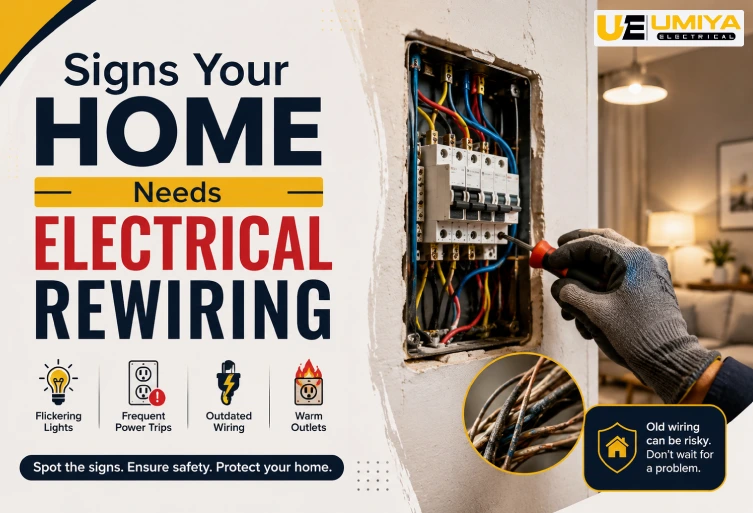
Electrical wiring is one of the most important systems in your Auckland home, but it is often hidden behind walls and ceilings, making problems difficult to notice. As wiring gets older or your home’s electricity usage increases, faults can begin to appear through flickering lights, tripping breakers, unusual smells, or damaged outlets. These warning signs should not be ignored because electrical faults can affect appliances and create serious safety risks. If you believe your home needs electrical rewiring, identifying the early signs can help you arrange professional assistance before a small problem becomes a major one.
Why Electrical Rewiring May Be Needed
Older homes may have electrical systems that were designed for much lower electricity demand than modern households require. Today’s Auckland homes commonly use heat pumps, ovens, dryers, washing machines, computers, entertainment systems, and many other appliances at the same time. Over the years, wiring can also become damaged, deteriorated, or unsuitable for the property’s current requirements. Electrical rewiring can replace outdated or damaged wiring and help create a safer, more reliable electrical installation. However, the age of your property alone does not mean complete rewiring is necessary; a qualified electrician should inspect the system first.
1. Circuit Breakers Keep Tripping
Frequent circuit-breaker trips are an important warning sign that something may be wrong with your electrical system. A breaker may trip because of an overloaded circuit, faulty appliance, damaged wiring, or another electrical fault. If the same breaker keeps tripping, do not simply reset it repeatedly without finding the cause. An electrician can inspect the circuit and determine whether it needs repair, upgrading, or rewiring. Repeated breaker trips are particularly important when they occur alongside flickering lights, buzzing outlets, or unusual smells.
2. Lights Flicker or Dim
Flickering or dimming lights can sometimes be caused by a faulty bulb, but persistent problems may indicate an electrical issue. If your lights flicker when you switch on a large appliance such as a heat pump, oven, or washing machine, the circuit should be checked. Loose connections, overloaded circuits, faulty fittings, or deteriorating wiring can all contribute to lighting problems. If replacing the bulb does not solve the issue, arrange an electrical wiring inspection in Auckland rather than ignoring the symptom.
3. You Notice a Burning Smell
A burning plastic, smoky, or unusual electrical smell near a socket, switch, appliance, or wall should always be taken seriously. It can indicate overheating wiring, damaged insulation, a loose connection, or a faulty electrical component. Stop using the affected outlet or appliance and arrange professional assistance. If you see smoke or fire, prioritise your safety and contact emergency services. A persistent burning smell can be one of the clearest signs that your home needs electrical rewiring or electrical repairs.
4. Outlets Have Brown or Black Marks
Brown, black, or burnt marks around power outlets and switches can indicate overheating. You may also notice melted plastic or visible damage around the socket. Do not cover the mark or continue using the outlet simply because it still works. The problem could be an individual faulty fitting, a loose connection, an overloaded circuit, or damaged wiring behind the wall. A qualified Auckland electrician can inspect the outlet and determine whether it requires replacement or whether the wider circuit needs attention.
5. You Hear Buzzing or Crackling
Electrical switches and outlets should not normally make buzzing, crackling, sizzling, or popping sounds. These noises can indicate loose connections, damaged components, or electrical arcing. The problem should be checked promptly, especially if you also notice heat, sparks, flickering lights, or burning smells. Never remove a switch or socket yourself to investigate the noise. A licensed electrician can safely identify the source and determine whether a repair, circuit upgrade, or house rewiring in Auckland is required.
6. Power Outlets Feel Hot
A power outlet or switch should not become noticeably hot during normal use. Excessive heat can be associated with an overloaded circuit, loose connection, damaged socket, or wiring problem. If an outlet feels warm or hot, stop using it and have it inspected. This becomes even more important if there is also a burning smell, discolouration, buzzing, or intermittent power. Professional inspection can establish whether the problem is limited to the outlet or indicates a larger electrical issue.
7. Your Home Has an Old Electrical System
An older fuse box or outdated electrical installation does not automatically mean your entire home needs rewiring. However, it can be a good reason to have the system professionally assessed, particularly if the property has never been upgraded. Modern Auckland homes often have much higher electrical demand than older homes were originally designed for. An electrician can check the switchboard, circuits, wiring, and protective devices and recommend whether you need a switchboard upgrade, additional circuits, partial rewiring, or complete electrical rewiring.
8. You Rely Too Much on Extension Leads
If extension leads and multi-plug boards are used throughout your home because there are not enough fixed power outlets, your electrical layout may no longer meet your household’s needs. Extension leads are useful for temporary purposes but should not become a permanent substitute for properly installed outlets. Heavy reliance on them can also create unnecessary electrical loading and trip hazards. An electrician can assess whether additional outlets, dedicated circuits, or other electrical upgrades would be more suitable for your Auckland property.
9. You Experience Electric Shocks
Even a small shock or tingling sensation from a power outlet, appliance, switch, or other electrical equipment should not be ignored. It could be caused by a faulty appliance, damaged insulation, an earthing problem, or another electrical fault. Do not touch the equipment again to test it. Stop using the suspected item and arrange professional electrical assistance. If shocks are occurring at multiple points around your property, the wider electrical installation should be inspected to determine whether more extensive electrical work is required.
10. Wiring Looks Old or Damaged
Cracked, brittle, frayed, exposed, or damaged electrical wiring should be professionally assessed. Wiring can deteriorate because of age, heat, moisture, physical damage, pests, or previous poor-quality electrical work. Never attempt to repair exposed or damaged electrical wiring yourself. A qualified electrician can inspect the visible wiring and determine whether other concealed parts of the installation also require assessment. If significant sections are outdated or damaged, electrical rewiring Auckland may be recommended.
When Should You Call an Auckland Electrician?
You should arrange an electrical inspection if your home has repeated electrical faults or you notice warning signs such as burning smells, flickering lights, hot outlets, buzzing sounds, scorch marks, electric shocks, or frequent circuit-breaker trips. You should also consider an inspection before buying an older property or starting a major renovation. A professional can identify whether the problem requires a simple repair, switchboard upgrade, additional circuit, partial rewiring, or complete rewiring. Getting the problem assessed early can help protect your home and electrical appliances.
Final Thoughts
Knowing the signs that your home needs electrical rewiring can help Auckland homeowners recognise potential electrical problems before they become more serious. Frequent breaker trips, flickering lights, burning smells, damaged outlets, buzzing sounds, hot sockets, old wiring, and electric shocks should never be treated as normal. Not every warning sign means your entire home needs rewiring, but every persistent electrical problem deserves professional attention. If you notice these issues, contact a qualified Auckland electrician for an inspection and find out what your home actually needs.
FAQs
Have questions? We’ve answered some of the most common queries to help you understand the topic better.
Q1. How do I know if my home needs electrical rewiring?
Frequent breaker trips, flickering lights, burning smells, damaged outlets, buzzing sounds, and old wiring can indicate that your home needs electrical rewiring.
Q2. Does an old Auckland home always need rewiring?
No. The age of the home alone does not determine whether rewiring is required. A qualified electrician should inspect the existing electrical system first.
Q3. Is flickering lighting a sign of faulty wiring?
It can be. Persistent flickering may be caused by loose connections, overloaded circuits, faulty fittings, or deteriorating wiring and should be professionally checked.
Q4. How often should electrical wiring be inspected?
There is no single timeframe for every home. An inspection is recommended when you notice electrical problems, buy an older property, or plan a major renovation.
Q5. Should I hire an electrician for home rewiring?
Yes. Electrical rewiring should be assessed and carried out by an appropriately licensed electrical professional to ensure the work is safe and compliant.