
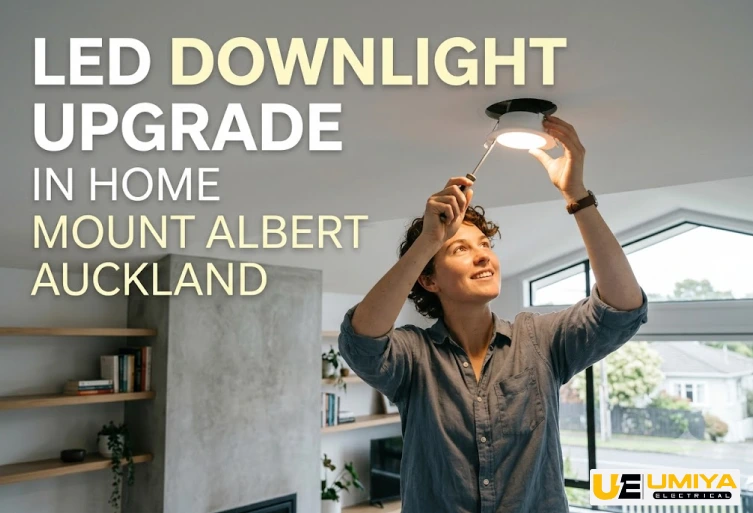
LED Downlight Upgrade in Home Mount Albert Auckland
Upgrading old halogen downlights to modern LED fittings is a practical way to improve lighting, reduce electricity consumption and modernise a home in Mount Albert, Auckland. Older halogen lights can use considerably more electricity and produce more heat than modern LED alternatives. A professional LED Downlight Upgrade can provide brighter, more consistent lighting while giving homeowners greater control over colour temperature and dimming. LED downlights are suitable for many areas of a home, including kitchens, living rooms, bedrooms, hallways and bathrooms, provided the correct fittings are selected for each location. The installation should also take ceiling insulation, existing wiring, dimmers and manufacturer’s requirements into consideration. For homeowners in Mount Albert, replacing several old fittings at the same time can also be more practical than dealing with individual failures over several years. Current Auckland pricing guides show that the cost depends on the number of fittings, product choice and installation requirements. (ECD)
Why Upgrade Old Downlights to LED?
An LED Downlight Upgrade can provide several benefits for a residential property. Modern LEDs generally consume less electricity than traditional halogen lighting, which can reduce the amount of energy used for everyday illumination. The potential saving depends on the existing lamp wattage, LED wattage, number of fittings, hours of use and electricity rate. LEDs also produce considerably less heat during normal operation than traditional halogen lamps. This can be particularly useful in recessed ceiling installations where heat management and insulation need to be considered carefully. Another benefit is lighting quality. Modern LED downlights are available in different brightness levels, colour temperatures, beam angles and designs. Homeowners can therefore select warmer lighting for bedrooms and living spaces and more neutral lighting for kitchens and work areas. LED fittings can also have a clean, modern appearance that suits contemporary home interiors. For homes being renovated, an LED lighting upgrade can be completed alongside other electrical improvements. A well-planned upgrade therefore combines energy efficiency, appearance, comfort and practical lighting requirements rather than simply replacing one type of lamp with another.
LED Downlight Upgrade Cost in Mount Albert Auckland
The cost of an LED Downlight Upgrade varies according to the number of lights, type of LED fitting, existing electrical installation and amount of labour required. A single fitting generally costs more per light because call-out and labour costs are spread across only one fitting. Recent Auckland pricing information suggests that some LED downlight supply-and-install projects can cost approximately $100–$180 per fitting, although actual prices vary between properties and electrical companies. (ECD) A larger project can have a lower average cost per fitting. For example, upgrading 20–30 lights throughout a home may provide better per-light pricing than replacing one fitting at a time. The final quote can also change if existing wiring requires attention, old transformers need removal, new dimmers are required or ceiling access is difficult. Premium LED fittings with low-glare designs, special finishes or smart controls may also cost more. For this reason, online prices should be treated as general guides. A property-specific quotation provides a much more accurate understanding of the total cost for your Mount Albert home.
How LED Downlights Can Reduce Energy Use
Energy efficiency is one of the main reasons homeowners choose LED lighting. A traditional halogen downlight can consume considerably more electricity than a modern LED fitting providing comparable illumination. Replacing several high-wattage fittings can therefore reduce the total lighting load of a home. For example, replacing a 50W halogen fitting with an 8W LED significantly reduces the electricity required whenever that light is operating. The total annual saving depends on how many fittings are replaced and how frequently they are used. Auckland lighting information has provided examples showing that replacing 20 halogen downlights with LEDs can potentially save hundreds of dollars per year under certain usage conditions. However, actual household savings will vary according to electricity prices and daily usage. (Northern Lights) Homes with many downlights operating for several hours each evening may see a greater difference than homes where lights are used occasionally. Kitchens, living rooms and hallways can be particularly relevant because they are often used every day. LED lighting can also form part of a broader energy-efficiency strategy alongside insulation, efficient appliances and improved heating controls.
LED Downlights and Ceiling Insulation
Ceiling insulation must be considered before installing recessed LED downlights. A downlight sits within the ceiling cavity, so the relationship between the fitting, insulation and surrounding materials needs to be checked. New Zealand’s electrical requirements include specific guidance for recessed luminaires. WorkSafe identifies NZECP 54 as the Electrical Code of Practice covering recessed luminaires and associated equipment. Not every LED downlight should automatically be covered with insulation. The suitability of a fitting depends on its design, classification, installation conditions and manufacturer’s instructions. During an LED Downlight Upgrade, an electrician can check the existing ceiling arrangement and recommend fittings appropriate for the property. This is particularly useful in older homes where previous electrical or renovation work may have resulted in different fitting types. Selecting the correct fitting from the beginning can help avoid problems and ensure the new lighting system works properly with the home’s existing ceiling construction.
Choosing the Right LED Colour Temperature
Colour temperature can significantly affect how a room looks and feels. LED downlights are available in different colour temperatures, with warm white and neutral white being common choices for residential applications. Warm white lighting is often suitable for bedrooms and living rooms because it creates a softer, more relaxed atmosphere. Neutral white lighting can work well in kitchens, laundries, bathrooms and work areas where clearer illumination is useful. The choice should also consider wall colours, flooring, furniture and natural daylight. A lighting colour that looks good in one room may not produce the same effect in another. Homeowners do not necessarily need to use exactly the same colour temperature throughout the property. Choosing lighting according to the purpose of each room can create a more comfortable result. During an LED Downlight Upgrade in Mount Albert Auckland, discussing colour temperature before installation can help ensure the selected fittings match the home’s interior and everyday lighting requirements.
Are Dimmable LED Downlights Worth Considering?
Dimmable LED downlights can provide additional flexibility, particularly in living rooms, bedrooms and dining areas. Bright lighting may be useful during cleaning or other activities, while lower lighting can create a softer atmosphere in the evening. However, not every LED downlight is compatible with every dimmer switch. Older dimmers may have been designed for halogen or incandescent lamps and may not operate correctly with modern LED fittings. Compatibility problems can result in flickering, buzzing or poor dimming performance. For this reason, the LED fitting and dimmer should be considered together during the upgrade. If your Mount Albert home already has dimmer switches, mention this before purchasing the new fittings. An electrician can check whether the existing dimmer is suitable or whether an LED-compatible dimmer should be installed. Smart lighting controls can also be considered if you want app-based control, schedules or integration with other home automation systems.
How Many Downlights Does a Home Need?
The number of downlights required depends on room size, ceiling height, fitting brightness, beam angle, furniture layout and available natural light. Installing more fittings does not automatically create better lighting. Too many bright downlights can create glare and make a room uncomfortable. A practical lighting plan considers how each space is used. A kitchen may require stronger and more carefully positioned lighting, while a bedroom may benefit from softer illumination and fewer fittings. Living rooms should also be planned carefully because placing bright downlights directly above seating areas can create unwanted glare. Low-glare fittings or additional lamps can provide a more balanced lighting arrangement. If existing downlights are being replaced, homeowners may be able to use the current ceiling openings where appropriate. This can reduce unnecessary ceiling alterations and make the installation more straightforward. Before starting a large upgrade, it is useful to discuss the layout with an electrician or lighting professional so the final arrangement provides practical illumination without unnecessary fittings.
Is a Licensed Electrician Required for Downlight Installation?
Electrical work in New Zealand is regulated, and homeowners should understand the requirements before undertaking lighting work. WorkSafe states that electrical work carried out for payment or reward must be undertaken by an appropriately licensed electrical worker. WorkSafe also provides information about electrical work that homeowners may legally undertake themselves under specific conditions. However, the applicable requirements depend on the type of work being performed. For a professional residential LED Downlight Upgrade, using a licensed electrician allows the existing installation to be assessed and the replacement fittings to be installed according to the relevant requirements. The electrician can also check wiring, switches, dimmers and ceiling conditions before completing the installation. Where certification is required, the appropriate electrical documentation should also be completed. WorkSafe recommends checking that your electrical worker holds the appropriate practising licence and discussing certification requirements for the work being completed.
What Happens During an LED Downlight Upgrade?
A professional LED Downlight Upgrade normally begins with an inspection of the existing lighting. The electrician can determine how many fittings need replacing and whether the current wiring, switches and dimmers are suitable for the new LEDs. The next step is selecting appropriate fittings based on room usage, ceiling conditions, insulation, brightness, colour temperature and dimming requirements. This helps ensure that the products are suitable before installation begins. The old fittings can then be removed and the replacement LEDs installed. If new locations are required, additional wiring and ceiling work may also be necessary. Once the fittings are installed, the electrician can test the lights and controls to ensure they operate correctly. Dimmers should also be checked where applicable. For larger homes, the project can be planned room by room or completed throughout the property in one installation. This gives homeowners flexibility based on their budget and lighting priorities.
Upgrade Your Mount Albert Home With Umiya Electrical
An LED Downlight Upgrade in Mount Albert Auckland can improve the appearance, efficiency and functionality of residential lighting. Replacing older halogen fittings with suitable LEDs can reduce energy use while providing more choices for brightness, colour temperature and dimming. The upgrade should be planned around the actual property rather than based only on the price of an individual light. Existing wiring, ceiling insulation, fitting requirements, dimmers and room usage all influence the final result. Umiya Electrical provides residential electrical services in Auckland and can help homeowners discuss their lighting requirements and electrical upgrade needs. Whether you need a few outdated downlights replaced or want to modernise the lighting throughout your home, professional assessment can help identify suitable options and provide a clearer idea of the required work. If your Mount Albert home still uses old halogen downlights, an LED upgrade can be a practical improvement for everyday comfort, energy efficiency and modern home lighting. Looking for an LED Downlight Upgrade in Mount Albert Auckland? Contact Umiya Electrical to discuss your existing downlights, lighting requirements, dimming options and installation needs.
FAQs
Have questions? We’ve answered some of the most common queries to help you understand the topic better.
Q1. How much does an LED Downlight Upgrade cost in Mount Albert?
Costs vary according to the number and type of fittings, installation requirements and existing electrical conditions. Some Auckland guides indicate approximately $100–$180 per fitting for certain supply-and-install projects. (ECD)
Q2. Can old halogen downlights be replaced with LEDs?
Yes, suitable LED fittings can replace many older halogen downlights, but the replacement needs to be appropriate for the existing electrical and ceiling conditions.
Q3. Can LED downlights be installed around ceiling insulation?
The answer depends on the fitting and installation arrangement. NZECP 54 provides requirements for recessed luminaires and insulation. (WorkSafe)
Q4. Can existing dimmers work with LED downlights?
Sometimes. The LED fitting and dimmer need to be compatible. Older dimmers may need to be replaced with LED-compatible models.
Q5. How much electricity can LED lighting save?
The saving depends on the old fitting wattage, LED wattage, number of lights, operating hours and electricity price. LEDs generally consume considerably less energy than traditional halogen lighting.