

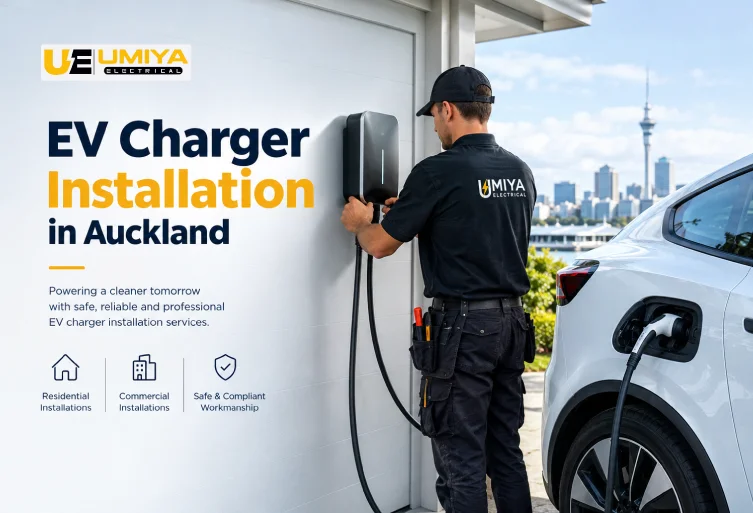
EV Charger Installation in Auckland
As electric vehicles become increasingly popular across Auckland, more homeowners and businesses are looking for convenient and reliable ways to charge their vehicles. Having a dedicated charging point at home or at work makes everyday charging easier and reduces the need to rely entirely on public charging stations. With a suitable charging unit, drivers can charge their vehicles while sleeping, working, or carrying out their daily activities. EV Charger Installation involves more than mounting a charging unit on a wall. The electrician must assess the property’s electrical supply, switchboard capacity, wiring requirements, parking location, and compatibility with the vehicle. These factors help determine the right charger and whether electrical upgrades are needed before installation. For Auckland residents, a properly planned EV charging solution can also provide access to convenient charging schedules, energy monitoring, and smart charging features. Umiya Electrical provides electrical services in Auckland and can help you understand the requirements for installing a home or commercial EV charger. This guide explains the main benefits, installation process, costs, and safety considerations to help you make an informed decision.
Why Choose Professional EV Charger Installation in Auckland?
Professional EV Charger Installation provides a dedicated charging solution designed around your vehicle and property’s electrical system. Unlike relying on a portable charging cable for everyday use, a wall-mounted charging unit can offer a more convenient and practical arrangement for regular charging. The charging speed depends on the charger’s output, the vehicle’s onboard charging capability, and the available electrical supply, so selecting suitable equipment is important. For Auckland homeowners who commute regularly, charging at home can reduce the need for additional stops at public charging stations and make daily travel easier to manage. Businesses can also install charging points for employees, customers, tenants, or company vehicles, depending on their parking facilities and electrical capacity. A professional assessment helps ensure the charging arrangement is appropriate for the property and its intended use. Another advantage of EV Charger Installation is the opportunity to use smart charging features where supported by the selected equipment. Some chargers allow users to schedule charging, monitor electricity consumption, and manage charging through a mobile application. Depending on your electricity plan, scheduling may help you take advantage of lower off-peak rates, although actual savings vary according to the tariff and charging habits. Compatible chargers may also work with certain solar energy systems, allowing homeowners to make better use of available solar electricity. However, these features depend on the charger, vehicle, and energy system, so compatibility should be checked before purchasing equipment. For general information about choosing a suitable charger, visit EECA’s smart EV charger guidance. Choosing the right charging unit also requires understanding your electrical supply. Many Auckland homes use single-phase power, which may be suitable for a home charger depending on the unit’s rating and the property’s available capacity. Three-phase power can support higher charging rates in compatible installations, but an upgrade is not automatically necessary for every electric vehicle owner. The electrician should assess the switchboard, existing electrical load, wiring, and charging requirements before recommending any changes. This is particularly important in older properties or homes with several high-demand electrical appliances. Planning ahead can also help if you expect to purchase another electric vehicle or install additional electrical equipment in the future.
EV Charger Installation Process and Cost in Auckland
The EV Charger Installation process begins with an assessment of your vehicle, parking area, electrical supply, and preferred charging location. The electrician checks whether the existing switchboard can accommodate the additional load and determines whether a dedicated circuit or other electrical work is required. The distance between the switchboard and charger location is important because longer cable routes may require additional materials and labour. The installation may involve mounting the charging unit, running suitable wiring, fitting the required protective devices, and completing the electrical connections. For outdoor installations, the equipment and installation method must be suitable for the environmental conditions and protected against foreseeable damage. Discussing these requirements before work begins helps establish a clear scope and reduces the likelihood of unexpected costs. After the charger has been installed, the electrician carries out the required testing and checks that the equipment operates according to its specifications and applicable New Zealand electrical requirements. The installer should explain how to connect your vehicle, use any smart features, and respond to warning indicators or fault messages. You should also receive the electrical documentation required for the work undertaken, including a Certificate of Compliance and an Electrical Safety Certificate where applicable. Keep these records with your charger information and warranty documents for future reference. Fixed electrical work should be completed by an appropriately licensed electrical worker, and you can read WorkSafe New Zealand’s guidance on getting electrical work done for further information. To discuss an installation for your Auckland property, visit Umiya Electrical. The cost of EV Charger Installation in Auckland depends on the charger, cable distance, switchboard condition, and complexity of the electrical work. As a general guide, a straightforward smart home charger installation may cost around NZ500–NZ1,000 for installation work, but this is not a guaranteed price and may exclude the charging unit itself. Additional wiring, switchboard modifications, difficult cable routes, or electrical supply upgrades can increase the total cost. Moving from single-phase to three-phase power may involve additional work and should only be considered after a proper assessment. Smart features, charger output, mounting requirements, and the location of the parking space can also influence the quotation. For this reason, an electrician should assess the property before providing a reliable estimate. Before approving a quote, ask whether the price includes the charger, installation labour, wiring, protective devices, testing, and required electrical documentation. It is also worth clarifying whether any necessary switchboard upgrades or additional work are included. Comparing quotations with the same scope of work makes it easier to understand differences in price and service. If you want to learn more about charging options and installation considerations, consult EECA’s official EV charging guidance. The most suitable solution is one that meets your daily charging needs, fits your budget, and complies with applicable electrical safety requirements.
Home and Commercial EV Charger Installation by Umiya Electrical
Home EV Charger Installation should be planned around your parking arrangement, vehicle charging port, and existing electrical system. A garage close to the switchboard may allow a straightforward installation, while a long driveway or detached garage could require a longer cable route and additional work. The charger should be positioned so the cable reaches the vehicle comfortably without creating trip hazards or obstructing access. Homeowners should also consider weather exposure, potential vehicle impact, and whether the charging location will remain practical if their parking arrangements change. If you have solar panels or plan to add other high-demand appliances, discuss these requirements with the electrician before selecting the charger. A properly planned installation can make everyday charging more convenient while avoiding unnecessary electrical work. Commercial EV Charger Installation involves additional considerations because the charging facilities may serve employees, customers, tenants, visitors, or business fleets. Businesses should consider how many vehicles need charging, how long they remain parked, and how much electrical capacity is available at the premises. Some sites may require multiple charging points, load management, access controls, or energy monitoring, depending on how the facilities will be used. Parking layout, accessibility, cable management, and possible future expansion should also be considered before equipment is purchased. Landlords and property managers may need to review shared electrical infrastructure, parking arrangements, and responsibility for installation costs before proceeding. An assessment helps identify a suitable approach for the property’s current needs and potential future demand. Umiya Electrical provides electrical services in Auckland and can discuss the requirements involved in installing an EV charging point at a residential or commercial property. Before purchasing equipment, it is useful to share your vehicle model, preferred installation location, and any available information about the existing switchboard. If you have already selected a charger, provide its model and specifications so its suitability can be assessed. You should also confirm the electrician’s current practising licence, the proposed scope of work, and the electrical documentation that will be supplied. These steps help you understand what the installation involves and make an informed decision about your charging setup. Visit the Umiya Electrical website or contact the team to discuss your requirements.
Conclusion
Installing a dedicated charging point can make electric vehicle ownership more convenient for Auckland homeowners and businesses. The right charger depends on your vehicle, electrical supply, switchboard capacity, parking arrangement, and daily charging requirements. A professional assessment helps determine whether upgrades are needed, which equipment is suitable, and what the installation is likely to cost. It also ensures that safety, testing, and applicable electrical documentation are considered from the beginning. If you are planning EV Charger Installation in Auckland, Umiya Electrical can discuss your residential or commercial electrical requirements and help you understand the next steps. Visit Umiya Electrical or contact the team to enquire about your property and charging needs.
FAQs
Have questions? We’ve answered some of the most common queries to help you understand the topic better.
Q1. How much does EV Charger Installation cost in Auckland?
A straightforward home installation may cost around NZ500–NZ1,000 for installation work, excluding the charger in some cases. The final price depends on the property and electrical requirements.
Q2. Can I install an EV charger at home?
Yes. A suitable charger can be installed at home when the electrical supply, equipment, and installation meet applicable safety requirements.
Q3. Do I need a switchboard upgrade?
Not always. An electrician must assess your switchboard and available electrical capacity to determine whether an upgrade is necessary.
Q4. How long does installation take?
A straightforward installation may take a few hours, while additional wiring or switchboard upgrades can take longer.
Q5. Is professional installation necessary?
Yes. Use an appropriately licensed electrical worker to ensure the installation meets applicable New Zealand electrical safety requirements.

